
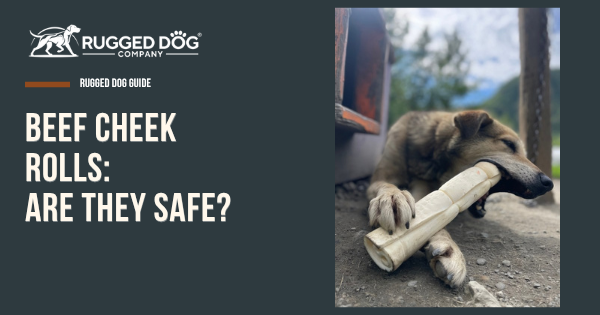
The straightforward answer: beef cheek rolls can be an appropriate long-lasting chew for many dogs when they're properly sized and supervised, but no edible chew is completely risk-free.
Beef cheek rolls have become popular with owners looking for substantial chews, especially for dogs that make quick work of ordinary treats. But choosing the right chew means understanding what it's made from, how your dog chews, and when it's time to take it away.
For serious chewers, the biggest considerations are chew size, chewing intensity, dental health, supervision, and the risk of swallowing large pieces.
What Are Beef Cheek Rolls Made Of?
Beef cheek rolls are made from cattle cheek tissue that is processed, shaped, and dried into a firm dog chew.
The resulting texture can provide a substantial chewing experience, particularly for dogs that prefer working on a larger chew rather than finishing a small treat quickly.
At Rugged Dog Company, our natural beef cheek rolls are made from South American beef cheek.
We offer different sizes to accommodate different chewing needs, including our substantial 10-inch Gargantuan Beef Cheek Rolls and smaller 5-inch Beef Cheek Rolls.
The important thing isn't simply whether a chew is labeled large, thick, or long-lasting. It's whether the chew is appropriate for your individual dog.
Are Beef Cheek Rolls Rawhide?
Beef cheek rolls and traditional rawhide chews are not necessarily the same product, but both are derived from cattle tissue.
Traditional rawhide is generally made from the inner layer of animal hide, while beef cheek rolls are marketed as being made from cheek tissue.
However, the term beef cheek roll does not guarantee that every manufacturer uses identical materials or processing methods.
That's why ingredient transparency matters.
At Rugged Dog Company, our beef cheek rolls are marketed as rawhide-free and made from beef cheek tissue.
Regardless of how a chew is labeled, owners should still consider its firmness, size, and how their dog actually chews it.
What Are the Risks of Beef Cheek Rolls?
Like other edible chews, beef cheek rolls carry risks that owners should understand.
Choking. A dog may attempt to swallow a large piece or the remaining end of a chew. Pieces that are too large to swallow safely can create a choking hazard.
Gastrointestinal obstruction. Swallowing large, insufficiently chewed pieces may cause digestive problems, including an intestinal blockage.
Dental damage. Firm chews can potentially damage teeth, particularly when dogs bite down forcefully or attempt to crack hard pieces.
Digestive sensitivity. Some dogs may experience gastrointestinal upset when introduced to a new animal-based chew.
A dog that slowly gnaws at a cheek roll behaves differently from one that tries to tear off and swallow large sections.
Understanding that difference is essential when selecting an appropriate chew.
Are Beef Cheek Rolls Digestible?
Beef cheek rolls are animal-derived edible chews, but digestibility can vary with the product, processing method, and size of the pieces consumed.
Digestible does not mean a dog should be allowed to swallow large chunks.
Even edible materials can cause choking or gastrointestinal obstruction when swallowed in pieces that are too large.
Monitor your dog during chewing, and remove the chew if they begin breaking off or attempting to swallow large pieces.
If your dog has a sensitive stomach, food allergies, or a history of digestive problems, consult your veterinarian before introducing a new chew.
How Do You Choose the Right Beef Cheek Roll?
There isn't one perfect chew size for every dog.
Consider four factors:
Dog size. Choose a chew large enough that your dog cannot easily swallow it whole.
Chewing style. Some dogs steadily gnaw, while others aggressively tear, crush, or attempt to swallow pieces.
Thickness and length. A substantial chew provides more material to work through, but larger dimensions don't automatically make it safer.
Dental health. A dog with damaged teeth or a history of dental fractures may need a different chewing option.
For larger dogs that work through ordinary chews quickly, our Gargantuan 10-inch Beef Cheek Rolls offer a substantial option measuring approximately 10 inches long and 2–3 inches thick.
We also offer 5-inch Beef Cheek Rolls for owners seeking a smaller format.
The right choice depends on your dog's mouth size, chewing behavior, and individual needs—not breed or weight alone.
Are Beef Cheek Rolls Safe for Puppies?
Extra caution is appropriate with puppies.
Puppies have developing teeth and chewing habits, and some firm chews may be too demanding for their teeth.
Whether a beef cheek roll is appropriate depends on the puppy's age, size, dental development, and chewing behavior.
If you're considering one for a puppy, ask your veterinarian first.
A softer, puppy-appropriate chew may be a better choice during teething.
How Long Do Beef Cheek Rolls Last?
There's no honest universal answer.
One dog may spend a long time gradually working through a beef cheek roll, while another may consume it much more quickly.
Several factors influence chewing time:
- Your dog's size and chewing intensity
- The chew's thickness and density
- How frequently your dog chews
- Whether your dog gnaws gradually or breaks off pieces
A thicker chew may provide more material to work through, but longer-lasting doesn't automatically mean safer.
Our goal is to help owners find chews suited to their dogs rather than promise that any product will last a specific number of hours.
When Should You Take a Beef Cheek Roll Away?
Don't wait until the chew is completely gone.
Remove the beef cheek roll when the remaining piece becomes small enough that your dog could swallow it whole.
Also end the chewing session if your dog begins tearing off large sections, attempting to gulp pieces, or aggressively cracking the chew.
Always supervise your dog with edible chews, including during crate time.
If you notice signs of choking, difficulty swallowing, repeated vomiting, or abdominal discomfort after chewing, seek veterinary care promptly.
Where Beef Cheek Rolls Fit in the Rugged Dog System
At Rugged Dog Company, we believe dogs that chew hard need more than another disposable toy. They need appropriate outlets for their energy, natural chewing instincts, and everyday enrichment.
That's why we built the Rugged Dog System around three principles:
ENGAGE. EXERCISE. SETTLE.
Beef cheek rolls can support the Settle part of that approach by providing an extended chewing activity for dogs that can manage them appropriately.
Our bully sticks, beef cheek rolls, and yak cheese chews offer different options based on your dog's preferences and chewing behavior.
The goal isn't to find one chew that works for every dog. It's to find the right chewing experience for the individual dog.
The Bottom Line: Are Beef Cheek Rolls Safe for Dogs?
Beef cheek rolls can be appropriate for many dogs when they're properly sized, carefully selected, and supervised.
But no chew is completely risk-free.
Choose a chew that fits your dog's size and chewing behavior. Monitor how your dog handles it, and remove it before the remaining piece becomes a swallowing hazard.
For dogs that tend to gulp large pieces or aggressively crack hard chews, another option may be more appropriate.
Ready to Find the Right Chew?
Every dog chews differently. Explore our natural beef cheek rolls and other long-lasting dog chews selected for serious chewers.
Whether you're considering a substantial Gargantuan roll or a smaller 5-inch option, start with your dog's size, chewing style, and individual needs.
