
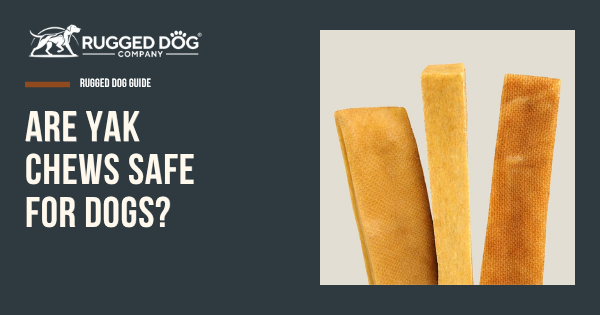
The straightforward answer: yak chews can be an appropriate long-lasting treat for some dogs, but their extremely hard texture makes them unsuitable for others. Tooth fractures, choking, and swallowing large pieces are important risks to understand before offering one.
Himalayan yak cheese chews have become popular with owners looking for a long-lasting, low-odor alternative to traditional dog chews. But just because a chew lasts longer doesn't automatically make it the right choice for every dog.
For serious chewers, the most important considerations are chewing style, dental health, appropriate sizing, and supervision.
What Are Himalayan Yak Chews Made Of?
Traditional Himalayan yak chews are made from milk that is processed, pressed, and dried into a dense, firm cheese chew.
Rugged Dog Company's XL Himalayan Yak Cheese Chews contain four ingredients:
- Yak milk
- Cow milk
- Salt
- Lime juice
They're rawhide-free and made without grains or gluten ingredients.
The drying process creates a particularly firm texture that gradually wears down as dogs gnaw on it. This is one reason yak cheese chews can last longer than many softer edible treats.
However, the same hardness that makes them long-lasting also creates an important consideration for your dog's teeth.
What Are the Risks of Yak Cheese Chews?
No edible dog chew is completely risk-free. With yak cheese chews, three concerns deserve particular attention.
Tooth fractures. Yak chews can be extremely hard. Dogs that bite down forcefully, especially those that try to crack or crush chews, may damage or fracture their teeth. A chew that is too hard for your dog's teeth isn't a good choice, regardless of how long it lasts.
Choking. As a yak chew becomes smaller, a dog may attempt to swallow the remaining piece. Loose fragments can also present a choking hazard.
Swallowing large pieces. Although yak cheese is an edible product, swallowing a large, hard piece can cause gastrointestinal problems, including an obstruction.
Pay attention to how your dog interacts with the chew. A dog that steadily gnaws at the surface behaves differently from one that tries to break the entire chew apart.
If your dog aggressively cracks, crushes, or swallows hard pieces, choose a more appropriate chewing option.
How Do You Make Yak Chews Safer for Dogs?
You cannot eliminate every risk, but responsible chew selection and supervision can help.
Consider your dog's teeth. Very hard chews may not be appropriate for dogs with dental disease, damaged teeth, or a history of tooth fractures. Dogs that bite down forcefully on hard objects may also be poor candidates.
Choose an appropriate size. The chew should be large enough that your dog cannot easily swallow it whole.
Watch your dog's chewing style. Introduce new chews under close supervision. If your dog tries to crack the chew into hard chunks rather than gradually gnawing it, remove it.
Inspect the chew regularly. Discard loose fragments and remove the chew when the remaining piece becomes small enough to swallow.
Always supervise chewing. Do not leave your dog unattended with a yak chew, including during crate time.
If you're unsure whether a hard cheese chew is appropriate for your dog's teeth or chewing behavior, ask your veterinarian.
What Size Yak Chew Should You Give Your Dog?
There isn't one universal size that works for every dog.
Consider your dog's body size, mouth size, chewing strength, and tendency to swallow pieces.
A larger chew may be easier for a medium or large dog to hold while gnawing, but size alone does not eliminate dental or choking risks.
At Rugged Dog Company, our XL Himalayan Yak Cheese Chews typically weigh approximately 5–6 ounces each and average around 6.5 inches long.
We select these chews for their substantial size and density, rather than relying on an XL label alone.
They're intended for owners looking for a more substantial chew, but their hardness still makes individual chewing behavior and dental health important considerations.
Are Yak Chews Safe for Puppies?
Extra caution is appropriate with puppies.
Puppies have developing teeth and chewing habits. Very hard chews may be inappropriate, particularly during teething or while permanent teeth are developing.
A puppy's size, age, dental development, and chewing behavior all matter.
If you're considering a yak cheese chew for a puppy, consult your veterinarian before introducing one. A softer, age-appropriate chewing option may be a better choice.
Are Yak Chews Digestible?
Yak cheese chews are edible, milk-based products, but digestible does not mean safe to swallow in large pieces.
A dog that gradually wears down the chew consumes it differently from one that bites off and swallows a large, hard chunk.
Even an edible material can cause choking or gastrointestinal obstruction when swallowed in an unsuitable size.
Yak chews also contain dairy ingredients, so they may not be appropriate for dogs with milk-protein allergies or dairy sensitivities.
Introduce new treats gradually and monitor how your dog responds.
What Should You Do When a Yak Chew Gets Too Small?
Don't wait until the entire chew disappears.
Once the remaining piece becomes small enough that your dog could swallow it whole, remove it.
Some manufacturers recommend soaking the remaining piece and microwaving it to create a puffed cheese treat. If you choose to follow that approach, use the specific manufacturer's instructions, allow the treat to cool completely, and inspect it before offering it under supervision.
Heating does not guarantee that the resulting treat is free from choking or dental risks.
When in doubt, discarding the remaining piece is the safer option.
How Long Do Yak Chews Last?
There's no honest universal answer.
A yak cheese chew may provide an extended chewing session for one dog and last much less time for another.
Several factors influence chewing time:
- The dog's size and chewing style
- The chew's thickness and density
- How often the dog chews
- Whether the dog gnaws gradually or attempts to break off pieces
A larger, denser chew may provide more material to work through, but longer-lasting doesn't automatically mean safer.
The right chew is one that's appropriate for your dog's teeth, chewing behavior, and individual needs.
Where Yak Chews Fit in the Rugged Dog System
At Rugged Dog Company, we believe dogs that chew hard need more than another disposable toy. They need appropriate outlets for their energy, natural chewing instincts, and everyday enrichment.
That's why we built the Rugged Dog System around three principles:
ENGAGE. EXERCISE. SETTLE.
Yak cheese chews can support the Settle part of that approach by providing an extended chewing activity for dogs that can safely manage their firm texture.
Our bully sticks, beef cheek rolls, and yak cheese chews give owners different options based on their dog's chewing habits and preferences.
The goal isn't to find one chew that works for every dog. It's to choose the right chewing experience for the individual dog.
The Bottom Line: Are Yak Chews Safe for Dogs?
Yak chews can be appropriate for some dogs, but their hardness makes careful selection especially important.
For dogs that gnaw steadily and have healthy teeth, an appropriately sized yak chew may provide a long-lasting activity.
For dogs that aggressively bite down, crack hard objects, have dental concerns, or swallow large pieces, a different chew may be a better choice.
Choose thoughtfully, supervise every session, and remove the chew when it becomes too small or starts breaking into potentially hazardous pieces.
Ready to Find the Right Chew?
Every dog chews differently. If you're looking for a substantial, long-lasting option, explore our XL Himalayan Yak Cheese Chews and other natural chews selected for serious chewers.
The right choice starts with understanding your dog's teeth, chewing style, and individual needs.
