
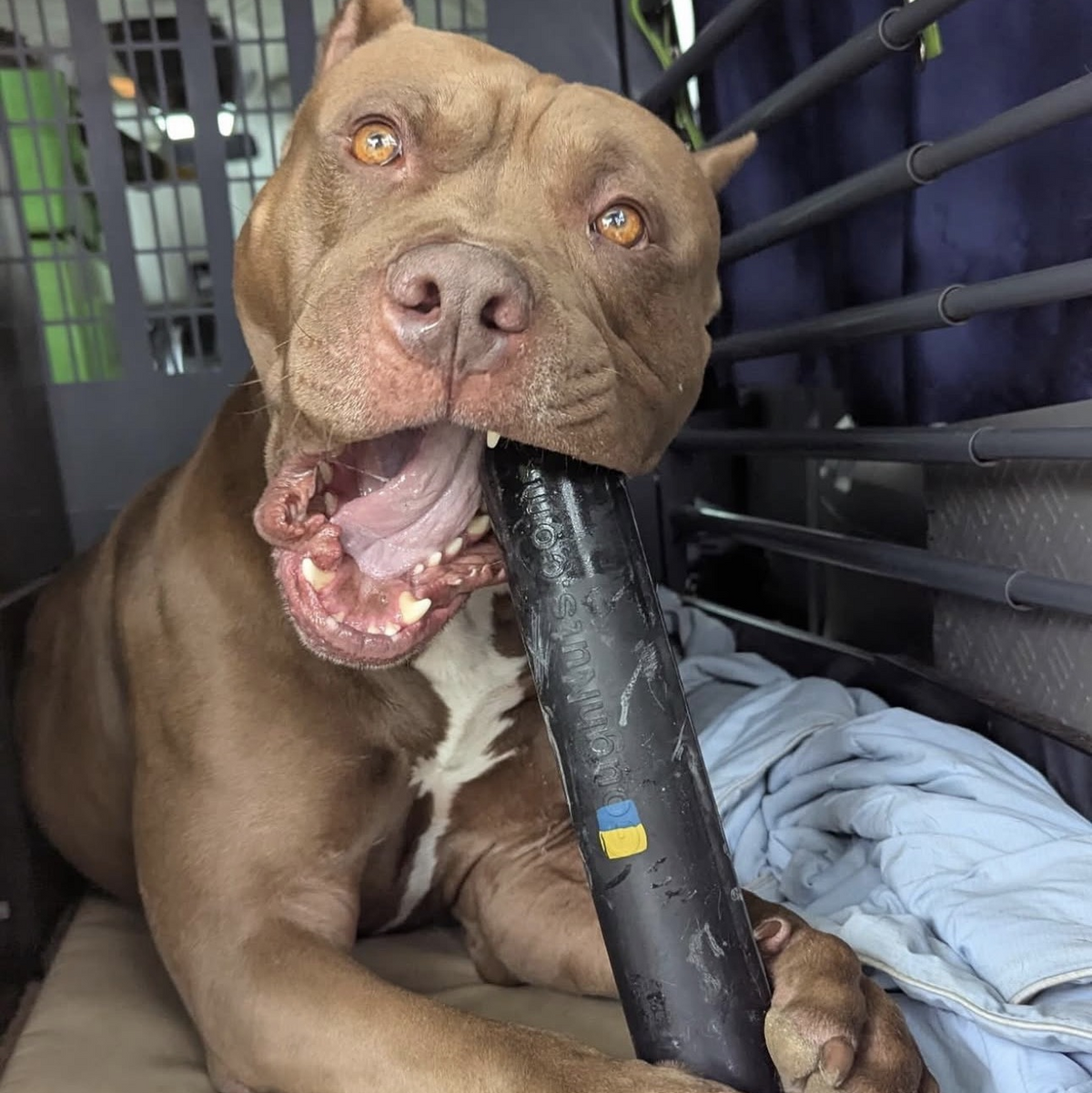
The straightforward answer: dogs destroy toys for several reasons, including natural chewing instincts, excitement, play preferences, boredom, and sometimes stress. For many dogs, tearing apart a toy is a normal and rewarding activity—not necessarily a behavioral problem.
But there's an important difference between a dog that enjoys vigorous play and one that repeatedly swallows pieces of destroyed toys.
If your dog can destroy a new toy in minutes, you're not alone. Owners of power chewers and high-drive dogs know how frustrating it can be to spend money on toys that barely survive a single play session.
Understanding why dogs destroy toys is the first step toward choosing better outlets for their energy and chewing instincts.
Why Do Dogs Destroy Their Toys?
Dogs explore and interact with the world using their mouths.
Chewing, tugging, shaking, carrying, and tearing are natural behaviors that can be part of normal canine play.
Some dogs gently carry a stuffed animal around the house. Others immediately attack the squeaker, rip open the seams, and pull out the stuffing.
Neither behavior automatically indicates a problem.
Several factors influence how a dog interacts with toys:
- Natural chewing and play instincts
- Breed tendencies and individual temperament
- Age and developmental stage
- Excitement and energy levels
- Toy material, shape, and construction
- Boredom, frustration, or stress
The key is understanding your individual dog's behavior rather than assuming every destroyed toy means something is wrong.
Why Do Dogs Love Destroying Squeaky Toys?
Squeaky toys can be especially exciting because they provide immediate feedback when bitten or squeezed.
For some dogs, that sound encourages continued biting, shaking, and playing.
Dogs may also enjoy manipulating the toy to locate and remove the squeaker.
While these behaviors can resemble elements of predatory play, not every dog that destroys a squeaky toy is displaying an unusually strong prey drive.
The biggest concern is what happens after the toy breaks apart.
Loose squeakers, stuffing, fabric, and rubber fragments can become choking or gastrointestinal obstruction hazards if swallowed.
If your dog routinely tears open plush toys, it may be better to reserve them for closely supervised play or choose a different type of toy altogether.
Is It Normal for Dogs to Destroy Their Toys?
Yes. For many dogs, destructive toy play is normal.
Some dogs enjoy the physical process of pulling, chewing, and manipulating objects. Others are motivated by the texture or the challenge of getting inside a toy.
However, there are situations where destructive behavior deserves closer attention.
Normal vigorous play generally occurs when a dog is engaged with a toy and otherwise appears comfortable and relaxed.
Potentially concerning behavior may include sudden changes in chewing habits, frantic destruction, swallowing nonfood objects, or destructive activity associated with distress.
If your dog suddenly begins destroying household items, seems anxious when left alone, or repeatedly consumes pieces of toys, consult your veterinarian or a qualified canine behavior professional.
The goal isn't to eliminate natural chewing behavior. It's to give your dog appropriate and manageable ways to express it.
Does Boredom Cause Dogs to Destroy Toys?
Boredom and insufficient enrichment can contribute to destructive behavior in some dogs.
Dogs need opportunities for physical activity, exploration, play, and mental engagement.
For high-drive dogs, a short walk may not satisfy every need for stimulation.
A dog that spends much of the day without meaningful activity may seek out its own entertainment, including chewing household objects or repeatedly dismantling toys.
However, boredom isn't the only explanation. Some dogs simply enjoy destructive play even when their exercise and enrichment needs are being met.
Providing a variety of appropriate activities can help:
- Food-dispensing enrichment toys
- Supervised tug and interactive play
- Scent games and treat searches
- Training sessions that encourage problem-solving
- Appropriate chewing activities
- Physical exercise suited to the dog's age and health
A balanced routine often works better than relying on one toy to occupy your dog all day.
Why Do Some Dogs Destroy Every Toy in Minutes?
Some dogs are exceptionally efficient chewers.
They may have strong jaws, persistent chewing habits, and a preference for biting or tearing at specific parts of a toy.
Others quickly learn where a toy is weakest.
Common failure points include:
- Exposed seams and stitching
- Thin rubber walls
- Small protruding pieces
- Fabric attachments
- Accessible squeakers
- Weak joints between materials
A dog that repeatedly targets these areas may destroy ordinary toys very quickly.
That doesn't necessarily mean the dog needs the hardest toy available.
Extremely hard materials can create dental risks, and a toy that's too small or breaks into pieces can become a swallowing hazard.
Instead, look for appropriate sizing, thoughtful construction, durable materials, and a design that matches your dog's chewing behavior.
What Makes a Dog Toy More Durable?
Durability isn't determined by one feature alone.
Several design characteristics can influence how a toy performs under demanding use.
Material selection. High-quality natural rubber and other purpose-built materials can provide different combinations of flexibility, resilience, and resistance to wear.
Wall thickness. A substantial construction may better withstand repeated chewing than a thin-walled toy of similar material.
Shape and design. Fewer exposed edges, seams, or protrusions may reduce obvious points where a dog can begin tearing.
Appropriate sizing. A toy should be large enough to reduce swallowing risk while remaining manageable for the dog's mouth.
Chewing behavior. Even a well-constructed toy may fail if a dog persistently attacks one area or uses it in a way the manufacturer did not intend.
At Rugged Dog Company, we select toys with these considerations in mind.
Our goal isn't to claim that any toy is impossible to destroy. It's to offer more durable options for dogs that routinely overwhelm ordinary toys.
Are Indestructible Dog Toys Really Indestructible?
No dog toy should be considered completely indestructible.
Even products marketed as indestructible can eventually wear, crack, tear, or fail under sufficiently demanding use.
The word indestructible is often used in marketing, but it shouldn't replace responsible product selection and supervision.
A durable toy should still be inspected regularly.
Replace or remove toys that develop structural damage, sharp edges, loose components, or pieces that could be swallowed.
If your dog is capable of tearing apart heavy-duty rubber toys, discuss appropriate alternatives with your veterinarian.
How Do You Choose Toys for Aggressive Chewers?
Start by observing how your dog plays.
Does your dog enjoy chasing and retrieving? Carrying and gnawing? Tugging? Working to remove food from a toy?
Different activities call for different designs.
For dogs that love to chew: Consider appropriately sized, durable rubber toys designed for repeated gnawing.
For dogs that need mental engagement: Food-dispensing and enrichment toys can provide an interactive challenge.
For dogs that enjoy physical play: Durable balls and tug toys may be useful during supervised activities.
For dogs that rapidly destroy plush toys: Consider reducing access to easily shredded materials and selecting toys with fewer detachable components.
Always follow the manufacturer's sizing and supervision instructions.
The best toy isn't necessarily the one that lasts the longest. It's one your dog enjoys and can use appropriately.
Can Mental Enrichment Help Destructive Dogs?
Mental enrichment can be a valuable part of a dog's daily routine.
Activities that encourage sniffing, problem-solving, and food-seeking give dogs opportunities to engage in natural behaviors.
Food-dispensing toys are one example.
Instead of simply handing your dog a treat, you can use an appropriate enrichment toy to create a small challenge.
Training games, scent work, and interactive play can also provide variety.
For dogs that become frustrated easily, start with simple activities and gradually increase the difficulty.
Enrichment shouldn't become another source of stress.
And remember that enrichment complements physical activity, rest, and appropriate social interaction rather than replacing them.
Where Destructive Chewing Fits in the Rugged Dog System
At Rugged Dog Company, we believe high-drive dogs need more than another disposable toy.
They need appropriate outlets for their energy, natural instincts, and everyday enrichment.
That's why we built the Rugged Dog System around three simple principles:
ENGAGE. EXERCISE. SETTLE.
ENGAGE focuses on mental enrichment and problem-solving activities that give dogs something meaningful to work on.
EXERCISE provides opportunities for durable, interactive play, including retrieving, tugging, and other activities appropriate for your dog.
SETTLE introduces appropriate chewing activities that can help some dogs transition into a quieter part of their routine.
Our natural dog chews can be part of that approach when selected for your dog's size, dental health, and chewing behavior.
The idea isn't that every dog needs the same products or that one toy solves every problem.
It's about creating a more balanced routine using activities that match your dog's individual needs.
Explore the Rugged Dog System to see how enrichment, exercise, and chewing activities can work together.
When Should You Be Concerned About Destructive Chewing?
Most dogs that destroy toys are simply engaging in vigorous play.
However, certain behaviors warrant attention.
Contact your veterinarian if your dog:
- Repeatedly swallows pieces of toys or other nonfood objects
- Suddenly develops unusually intense chewing behavior
- Shows signs of dental pain or mouth injury
- Destroys objects primarily when left alone and displays other signs of distress
- Experiences vomiting, loss of appetite, abdominal discomfort, or difficulty passing stool after potentially swallowing toy material
Suspected choking or intestinal obstruction requires prompt veterinary attention.
Understanding the cause of the behavior matters more than simply purchasing a stronger toy.
The Bottom Line: Why Do Dogs Destroy Toys?
Dogs destroy toys because chewing, shaking, pulling, and tearing can be natural and rewarding behaviors.
For some dogs, toy destruction is part of normal play. For others, boredom, frustration, or stress may contribute.
The solution isn't always to buy the hardest toy you can find.
Instead, choose toys suited to your dog's size and chewing style, supervise play, inspect products regularly, and provide a balanced combination of mental enrichment, physical activity, and appropriate chewing opportunities.
No toy is completely indestructible, but thoughtful product selection can help make playtime more enjoyable and manageable.
Ready to Find Better Toys for Your Power Chewer?
If your dog destroys ordinary toys in minutes, explore Rugged Dog Company's selection of durable rubber toys and enrichment products chosen for serious chewers.
We focus on thoughtful construction, appropriate materials, and products designed for demanding everyday play.
The goal isn't another disposable toy. It's finding products that work for the way your dog actually plays.
