
The best way to keep a dog entertained is to provide a mix of mental stimulation, physical activity, interactive play, and appropriate chewing opportunities. Dogs don't necessarily need constant entertainment, but they do benefit from activities that allow them to explore, problem-solve, and use their natural instincts.
If your dog gets bored easily, follows you around looking for something to do, or destroys ordinary toys in minutes, adding variety to their routine can make a meaningful difference.
And keeping a dog entertained doesn't always require expensive equipment or hours of exercise.
Here are 10 practical enrichment ideas to try at home.
Why Do Dogs Need Mental Stimulation?
Dogs need more than physical exercise to stay engaged.
Walking, running, and playing fetch provide valuable physical activity, but dogs also benefit from opportunities to sniff, investigate, learn, and solve problems.
Mental enrichment gives dogs appropriate outlets for these natural behaviors.
For some dogs, boredom or insufficient stimulation can contribute to unwanted behaviors, including excessive attention-seeking, chewing household objects, or restlessness.
However, not every behavioral problem is caused by boredom. Anxiety, medical issues, and individual temperament can also influence behavior.
The goal is to create a balanced routine that provides activity without constant excitement.
10 Ways to Keep Your Dog Entertained
1. Use Food-Dispensing Enrichment Toys
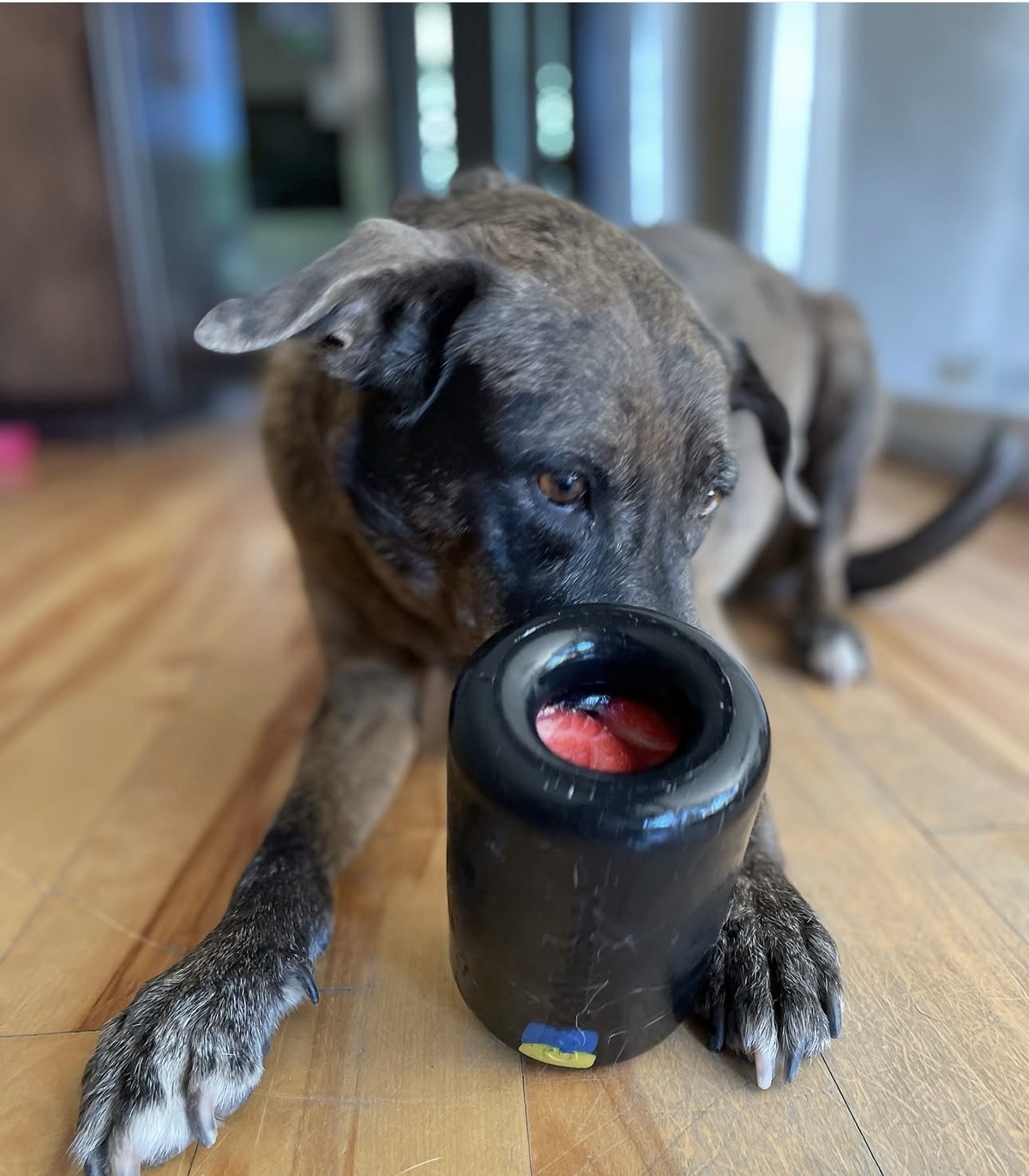
Food-dispensing toys encourage dogs to work for part of their meal or treats.
Instead of eating everything directly from a bowl, your dog can interact with a toy that releases food gradually.
These activities can encourage problem-solving and provide an engaging alternative to ordinary feeding.
Start with a simple challenge and gradually increase the difficulty as your dog becomes more experienced.
Choose an appropriately sized toy, follow its instructions, and supervise use.
For dogs that become frustrated, make the activity easier rather than forcing them to continue.
2. Play Hide-and-Seek With Treats
Scent games are an inexpensive way to provide mental enrichment.
Start by placing a few treats in easy-to-find locations while your dog watches.
Encourage your dog to search for them using a cue such as "Find it."
As your dog becomes more confident, gradually introduce more challenging hiding places.
You can also hide small portions of your dog's regular food.
Avoid locations containing household chemicals, medications, electrical cords, or objects your dog might swallow.
Scent games are particularly useful when outdoor exercise is limited.
3. Rotate Your Dog's Toys
You don't necessarily need dozens of toys available at once.
Try keeping a small selection accessible and rotating the others every few days.
Reintroducing a familiar toy after a break may renew your dog's interest.
Include different types of toys when appropriate:
- Durable rubber chew toys
- Food-dispensing enrichment toys
- Balls for supervised retrieving
- Tug toys for interactive play
- Puzzle toys suited to your dog's skill level
Inspect every toy before reintroducing it.
Remove anything with loose components, cracks, sharp edges, or damage that could create a swallowing hazard.
4. Practice Short Training Sessions
Training provides mental stimulation while strengthening communication between you and your dog.
You don't need a complicated training program.
Practice familiar behaviors such as sit, stay, touch, come, or place.
Once your dog understands the basics, introduce new skills in small steps.
For example, teach your dog to touch your hand, move around a cone, or retrieve a specific toy.
Keep sessions short and rewarding.
Five minutes of focused training may be more productive than a long session that leaves your dog frustrated.
5. Try Supervised Tug and Interactive Play
Interactive play gives dogs an opportunity to engage physically and mentally with their owners.
Tug can be particularly appealing to dogs that enjoy gripping, pulling, and working against resistance.
Choose a tug toy appropriate for your dog's size and strength.
Establish simple rules, including a reliable release cue, and keep the activity controlled.
Important: Tug toys are designed for interactive play and should not automatically be treated as unsupervised chew toys.
At Rugged Dog Company, we distinguish between toys intended for interactive tugging and products designed for sustained chewing.
Always follow the manufacturer's intended-use instructions.
6. Offer Appropriate Chewing Activities
Chewing is a natural behavior for dogs.
For some dogs, an appropriate chew can provide an engaging activity during a quieter part of the day.
Options may include durable rubber chew toys and certain edible chews.
However, the right choice depends on your dog's size, chewing style, dental health, and individual needs.
Very hard chews may create tooth-fracture risks, while small pieces or broken fragments can present choking or gastrointestinal hazards.
Supervise chewing sessions and remove items that become too small or damaged.
For more guidance, explore our dog chew comparison guide.
7. Create a Simple Indoor Obstacle Course
An indoor obstacle course can combine movement, focus, and training.
Use stable household objects to create simple challenges.
For example, you might teach your dog to walk around a chair, step onto a low stable platform, or move between designated markers.
Avoid unstable furniture, slippery surfaces, high jumps, or obstacles that could cause injury.
Keep the activities appropriate for your dog's age, physical condition, and mobility.
The objective isn't to exhaust your dog.
It's to provide a fun, controlled opportunity to learn and move.
8. Make Mealtime More Interesting
Meals offer a convenient opportunity for enrichment.
Depending on your dog's needs, you can use:
- Slow feeders
- Food-dispensing toys
- Supervised puzzle feeders
- Treat-search games
- Short training exercises using regular kibble
You can divide part of your dog's normal food allowance among these activities rather than adding extra treats.
This helps manage overall calorie intake.
Always choose feeding products that are appropriate for your dog's size and eating behavior.
9. Explore New Walking Routes and Sniffing Opportunities
Not every walk needs to focus on distance or speed.
Dogs gather information through scent, and allowing time to sniff can make an ordinary walk more engaging.
Try exploring a different safe route or allowing additional time for your dog to investigate interesting smells.
You can also incorporate simple training exercises along the way.
For high-energy dogs, a combination of structured movement and opportunities to explore may provide a more varied experience than repeating the same activity every day.
Always use appropriate restraint and follow local leash requirements.
10. Build a Balanced Daily Routine
One of the most effective ways to keep a dog entertained is to provide a predictable routine with different types of activity.
That doesn't mean your dog needs entertainment every waking minute.
Dogs also need adequate sleep, rest, and opportunities to relax.
A balanced day might include:
- A morning walk with time for sniffing
- A short training or food-enrichment session
- A supervised play session
- An appropriate chewing activity
- Quiet rest between activities
Adjust the routine to your dog's age, breed tendencies, health, and individual energy level.
The goal is meaningful engagement, not constant stimulation.
How Do You Keep a Dog Entertained While You're at Work?
Keeping a dog occupied while you're working requires a slightly different approach.
If you're working from home, consider scheduling short activity breaks throughout the day.
A brief training session, supervised food puzzle, or sniffing walk can provide variety between periods of rest.
If your dog will be home alone, safety becomes especially important.
Not every enrichment toy, chew, or puzzle is appropriate for unsupervised use.
Some dogs can tear apart toys or swallow components that would be dangerous without someone present.
Choose activities based on your dog's demonstrated behavior and the manufacturer's instructions.
Avoid leaving edible chews, easily damaged toys, or products with detachable pieces unattended.
If your dog displays signs of separation-related distress, enrichment alone may not resolve the problem. Consult your veterinarian or a qualified canine behavior professional.
How Can You Tell if Your Dog Is Bored?
Dogs may show boredom in different ways.
Possible signs include:
- Repeatedly seeking attention
- Restlessness when activity is limited
- Losing interest in familiar activities
- Seeking inappropriate objects to chew
- Creating their own games with household items
However, these behaviors aren't proof of boredom.
A sudden change in behavior, destructive activity associated with distress, or persistent restlessness may have other causes.
If you're concerned, consult your veterinarian before assuming your dog simply needs more exercise or toys.
What About Dogs That Destroy Every Toy?
Some dogs are particularly persistent chewers.
They may quickly identify weak points in toys, target exposed seams, or repeatedly bite the same area until the material fails.
For these dogs, choosing appropriate construction and materials is especially important.
But stronger doesn't always mean safer.
A toy that's excessively hard may pose dental risks, while one that's too small can become a swallowing hazard.
Look for products designed for your dog's size and intended activity.
And remember that interactive tug toys, fetch toys, enrichment toys, and dedicated chew toys may have different usage requirements.
For a deeper explanation, read our guide: Why Do Dogs Destroy Their Toys?.
How the Rugged Dog System Supports Daily Enrichment
At Rugged Dog Company, we believe high-drive dogs benefit from more than simply having another toy available.
That's why we built the Rugged Dog System around three complementary needs:
ENGAGE. EXERCISE. SETTLE.
ENGAGE focuses on mental enrichment, problem-solving, and interactive activities.
EXERCISE creates opportunities for durable play, retrieving, and other appropriate physical activities.
SETTLE incorporates suitable chewing activities as part of a quieter routine.
The three approaches work together, but they aren't interchangeable.
An interactive tug toy shouldn't automatically be used as a chew toy, and an edible chew shouldn't be left unattended simply because it is marketed as long-lasting.
Our goal is to help owners choose products that fit their dogs' actual behaviors and needs.
Explore the Rugged Dog System to learn more.
Frequently Asked Questions
How much mental stimulation does a dog need?
There isn't one fixed amount that works for every dog.
Age, health, temperament, activity level, and individual preferences all matter.
Start with manageable enrichment sessions and observe how your dog responds.
Can mental stimulation replace walks?
No. Mental enrichment and physical activity serve different purposes.
Both can contribute to a balanced routine, along with adequate rest and appropriate social interaction.
Are puzzle toys good for aggressive chewers?
Some puzzle toys may be suitable for certain dogs, but others contain parts that persistent chewers can damage or swallow.
Choose products based on your dog's behavior, follow manufacturer instructions, and supervise use.
Should I leave a dog chew out while I'm at work?
Not automatically.
Edible chews and many chew toys require supervision. Swallowing large pieces, choking, and dental injuries are important considerations.
Follow the product's safety instructions and avoid leaving potentially hazardous items with an unattended dog.
What if my dog doesn't like enrichment toys?
Try a simpler activity.
Some dogs prefer scent games, training, or interactive play over food puzzles.
Experiment with different appropriate activities rather than assuming every dog will enjoy the same type of enrichment.
The Bottom Line: How to Keep Your Dog Entertained
Keeping a dog entertained is about providing appropriate opportunities to explore, play, learn, chew, and rest.
Food-dispensing toys, scent games, training sessions, supervised interactive play, and varied walks can all contribute to a more engaging daily routine.
For high-drive dogs and power chewers, thoughtful product selection is particularly important.
Choose activities that match your dog's abilities, supervise when needed, and remember that no toy is completely indestructible.
Ready to Give Your Dog More to Do?
Explore Rugged Dog Company's selection of enrichment toys and slow feeders designed to encourage engagement, problem-solving, and interactive feeding.
Whether your dog loves working for treats or needs more variety in their routine, choosing the right activities can make everyday enrichment more rewarding.
